Group Picture of the Law Offices of Jeffrey S. Glassman
Justia Lawyer Rating

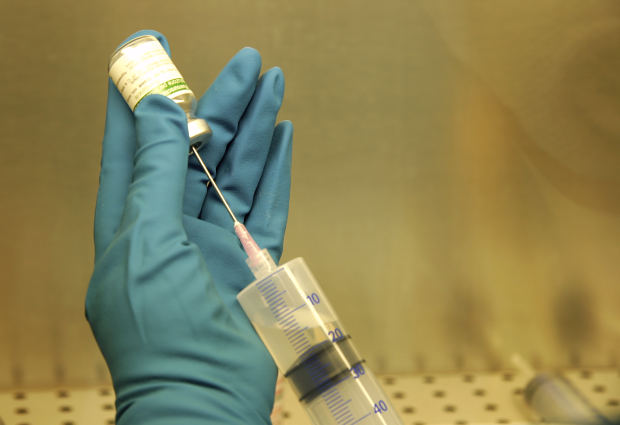
The general public is becoming more aware of the dangers of Xarelto. The problem with Xarelto is it has been shown to cause serious internal bleeding disorders, clotting disorders and other serious heath problems. There is currently an antidote for the irreversible symptoms of Xarelto bleeding disorders, but it is still in the experimental stages, and the company needs to undergo additional testing before the United States Food and Drug Administration (FDA) will approve the drug for general use. The antidote is an injectable medication being developed by another drug company, and it will be available for use in the emergency room if and when it is approved.

medication pills.jpgTo help keep sales up with dangers being made known to atrial fibrillation (Afib) patients, Bayer is hoping to find additional customers for their new drug. According to a recent news feature from RTT News, Bayer is now conducting clinical investigations into using Xarelto to treat and prevent deep vein thrombosis (DVT) and pulmonary embolism (PE) in cancer patients, in addition to the Afib patients for which is currently approved.
Continue reading

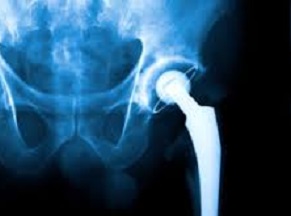
Absent a car accident, sports injury or other acute serious trauma, most people who undergo elective hip replacement surgery are older individuals who have dealt with years of osteoarthritis pain. While the average age has fallen slightly, most patients deal with arthritis pain until they can no longer get around, and eventually decide to undergo total hip replacement surgery.

hip implant.jpgPrior to having surgery, there are various non-surgical techniques, such as taking anti-inflammatory medications, cortisone injections, medical grade joint lubrication injections, and various other similar treatments, but eventually the pain gets to the point where total hip replacement surgery is the only feasible option.

According to a recent article from the NY Daily News, arthritis is one of the most common chronic health conditions in the United States. Researchers estimate there are over 25 million Americans suffering from chronic arthritis at any given time. While arthritis is cause by either normal wear-and-tear of a joint, or as result of some traumatic impact, with respect to hip arthritis, it is estimated the condition will develop in around 20 percent of all Americans at some point in their lives.
Continue reading

Xarelto is an anticoagulant medication manufactured by Bayer AG, the German pharmaceutical giant, and Janssen, a subsidiary of Johnson & Johnson, markets it in the United States.

courtroom-1-1207444-m.jpgXarelto is one of three relatively new forms of medication marketed to treat patients who suffer from a condition known as atrial fibrillation (Afib). The other drugs in this class of New Oral Anticoagulants (NOACs) include Pradaxa and Eliquis. All three of these medications are essentially designed to be replacements for Warfarin (Coumadin), which has been the longstanding preferred course of treatment for Afib patients to prevent clotting disorders such as stroke and pulmonary embolism (PE).
Continue reading

Those who work as professional horse jockey in the world of thoroughbred racing say it takes a lot of skill, hard work and dedication. There are also many health risks involved, which go far beyond injuries from falling off a horse during a race.

viejo-y-peludo-477851-m.jpgMany of the jockeys are forced to restrict their diets, so they do not weigh more than the extremely low (and dangerous) weight limits. This phenomenon was covered in an HBO documentary titled, “Jockey.” The competition to ride the top horses in the world means there is little room for any physical issues with riders, and even a minor injury normally means the end of a jockey’s career.

Gary Stevens was at one time one of the best riders in the sport. However, once his knee damage became too severe, he was forced to retire. Fortunately, he was able to undergo a total knee replacement and was able to get back out on the track and actually finished second in the Kentucky Derby riding Firing Line. According to a recent article from The Courier Journal, riding in the Kentucky Derby with a total knee replacement was practically unimaginable prior to Stevens’ latest race.
Continue reading

Transvaginal mesh implants were designed to treat painful and uncomfortable conditions in women, such as pelvic organ prolapse (POP) and stress urinary incontinence. Essentially, if a woman suffered from an inability to hold back the flow of urine or pain in the vaginal walls, doctors would surgically implant one of these mesh implants to correct the problems.

doctor1.jpgMedical device companies promised women if they had this simple procedure, they would no longer have to live with painful and embarrassing conditions and would get to live a normal pain-free life. While this sounds good, the devices lead to serious problems due to design defects.

Some women suffered an erosion of the vaginal wall, causing extreme pain and suffering, and making sexual intercourse excruciating. Other victims experienced a complete inability to use their pelvic muscles, leading to extreme discomfort and uncontrollable urination. Something sold as the answer to every patient’s dreams was really a nightmare waiting to happen, as our Boston transvaginal mesh injury attorneys have seen all too often.
Continue reading

While Bayer AG, the German pharmaceutical giant, has seen a recent increase in quarter-over-quarter profits, sales numbers for their bestselling drug, Xarelto, have actually dropped this past quarter for the first time since the United States Food and Drug Administration (FDA) approved it for market.

money-trading-1-1415239-m.jpgXarelto is a member of a class of drugs known as New Oral Anticogulants (NOACs) and, despite what drug makers claim, has been marketed as a replacement for Warfarin (Coumadin) for patients suffering from a serious medical condition known as atrial fibrillation (Afib). Afib is a serious heart condition, which can cause a patient to have a stroke or other serious clotting disorder. Due to Afib, patients must take either a blood thinner or other anticoagulant to prevent clots from forming. Not only can these clots block an artery causing heart failure or stroke, they can break free from the deep veins in which they formed and travel through the patient’s circulatory system to the lungs. If they puncture a hole in a patient’s lung, it leads to a serious medical condition known as a pulmonary embolism, which often results in death of a patient.
Continue reading

This time of year, there are a lot of sports to choose from on television. With the NBA and NHL playoffs in full swing, NASCAR racing and a still new Major League Baseball season underway, many are heading to sports bars, which have enough screens to watch them all at once.

syringes-and-vial-1028452-m.jpgWith all of these sports on television, it is almost impossible not to be subjected to a near constant barrage of commercials for testosterone replacement therapy drugs. These commercials tell men who are getting older and losing hair, gaining weight, feeling tired, suffering from mild depression and losing muscle tone (signs of normal male aging) their issues are really symptoms of having a low testosterone count. They can treat this “condition” by taking testosterone hormones, according to drug companies.

They have created a pretty compelling advertising campaign. What middle-aged man does not want to feel 20 years younger?

As it turns out, United States Food and Drug Administration (FDA) has not approved testosterone replacement therapy drugs to treat aging, but rather a very rare medical condition known as hypogonadism. Patients who suffer from hypogonadism have under-functioning glands and do not promote enough of the hormone.
Continue reading

Xarelto, like Eliquis and Pradaxa, are members of a class of drugs known as New Oral Anticoagulants (NOACs). While, technically, they are not a blood thinner like Coumadin (Warfarin), as they are closer to a class of medications known as statins, their respective makers hope they will go head-to-head with Warfarin and eventually replace it as the treatment of first resort for many patients.

pills.jpgWarfarin itself has a rather interesting history, as it was first discovered in relation to a disease that was killing cattle in the 1920s. After being created, it was then marketed as a rodenticide agent, and later used (unsuccessfully) by the United States Army as an experimental suicide agent. Eventually, it became used for its current purpose to treat atrial fibrillation patients.
Continue reading

While total knee replacement surgery is primarily done in older patients who have suffered years of arthritis, there is another group of patients who might be in need of an artificial knee joint. This group consists of younger athletes and those who may not even be athletes, but frequently engage in running activities such as races, marathons and triathlons.

cyclist-and-jogger-1353678-m.jpgFor many of these people who are experiencing knee pain, there is a fear of going to a doctor. Their fear is based upon a belief their doctor will tell them they need a knee replacement, and after they get one, they will never be able to run again, because an artificial joint was not designed for repeated impact of regular running.

As discussed in a recent news article from the San Francisco Examiner, doctors who frequently work with patients who enjoyed running believe every year a patient can get out of their natural knee, the better. This does not mean dealing with pain until it becomes unbearable, but rather trying less invasive surgical techniques short of total knee replacement. Some of these techniques include arterial cartilage paste grafting and rebuilding a patient’s damaged meniscus or replacing it without replacing the entire knee joint. This is sometimes known as a reconstruction or partial knee replacement. Robotic surgical techniques can be used to perform a series of less invasive replacements of individual knee components. This is in contrast to the traditional advice, which is often to do nothing until the pain becomes too bad to handle after years of further deterioration.
Continue reading

Boston’s PBS affiliate, WGBH, recently featured a program showing what it is like to be in the operating room during a minimally invasive total hip replacement surgery. Traditional methods involved making a 12-inch incision along the side of a patient’s hip and dislocating the hip joint from the pelvis. This method, still used in patients over 60 and who have other health issues, requires patients to stay in the hospital for days or even weeks and undergo a slow and painful recovery process. The large incision also increases the risk patients will develop a serious infection following surgery.

doctorpatientrelationship.jpgWith minimally invasive techniques, only a six-inch incision is needed at the top of a patient’s hip, and dislocation is not required in many cases. This means a patient can typically go home that same night and sleep in his or her own bed. This also means there will be less pain during recovery, less risk of an artificial hip failure, and less time away from work or one’s other daily routine.

The reason doctors are able to perform a minimally invasive total hip replacement surgery is though the use of modern technology. It all begins with surgeons and radiologists working together to take a CT scan of the patient’s pelvic area while he or she is in the operating room. Doctors then use a computer and the CT image to make a three dimensional virtual model of exactly how the operation will work. There is an electronic signaling device used to guide the surgeon while he or she is watching a monitor while the movements occur inside the patient.
Continue reading

Contact Information